From the March edition
Neighborhood Petition Delays Removal of Waller Street Ficus Trees
By Caylee Tompkins · March 2026
In January, the San Francisco Department of Public Works’ Bureau of Urban Forestry moved for emergency removal of seven Indian laurel fig trees on Waller near Steiner, citing that they posed an “immediate public safety hazard,” in a posted notice.
The ficus trees line a stretch of Waller just steps from homes and businesses and measure an average of 18 inches in trunk diameter, making them approximately 30 to 50 years old.
Discussion began circulating on Nextdoor on January 17, when Duboce Triangle resident Brian Kemler posted about the city’s notice. The thread drew more than 250 comments and hundreds of reactions, with neighbors split between expressing concern about losing mature trees and support for addressing potential safety risks.
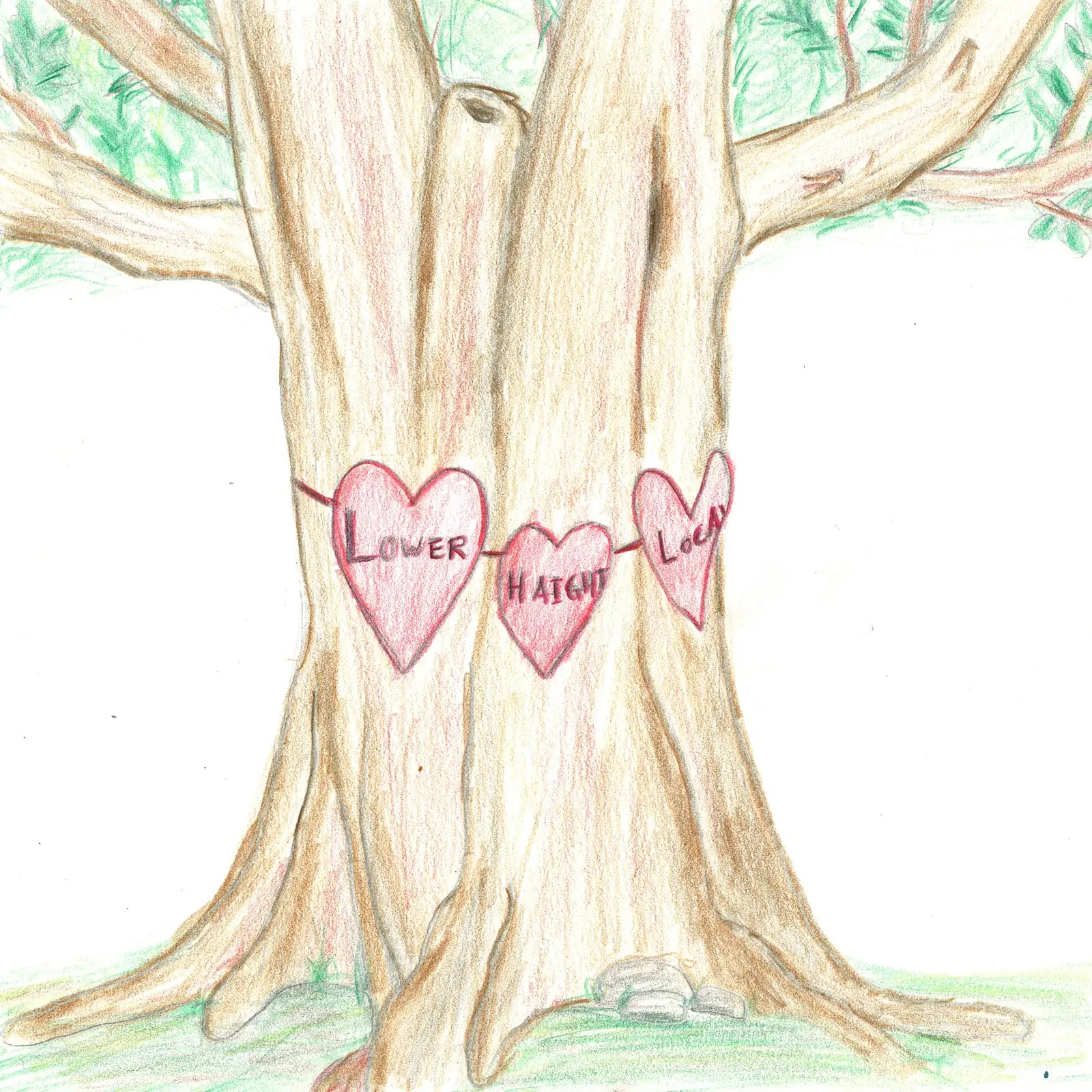
In the weeks following, neighbors tied flowers, ribbons, and handwritten notes to the tree trunks in opposition to their removal.
Staff and patrons of Cafe Réveille said the trees define the block’s character.
“Everyone has been sad about this,” a Cafe Réveille barista shared.
“There’s something magical about these trees,” said local realtor Annie Chang. “They also add such value to the neighborhood, especially with the backdrop of the Victorian houses.”
Joshua Klipp of the community environmental group Mission Verde launched a petition opposing the removals that gathered more than 800 signatures, urging the city to pause the decision and explore alternatives. Mission Verde also led an effort that successfully preserved roughly 80 trees along 24th Street after residents appealed similar removal plans.
After more than 400 residents contacted local officials about the Waller trees, the district supervisor’s office secured a secondary review of the planned removals.
“Our goal is to ensure that the community’s voices are heard, and as soon as we were notified about the potential emergency removal of the Waller trees, our office escalated to city departments to pause and reassess,” said District 5 Supervisor Bilal Mahmood. “We were able to secure a secondary review from the Acting Urban Forester which saved four of the trees and allowed the remaining three trees to be set for a public hearing. We appreciate everyone in the community who reached out – it is important to us that decisions around tree removals are guided and advised by experts but also allow for community process.”
The initial notice deemed the trees “dead, dangerous, or likely to fall” and classified them as an immediate structural hazard qualifying for emergency removal but offered no specific structural findings.
Emergency removals allow the Bureau of Urban Forestry to act outside the standard posting and appeal timeline. City records show the trees were last pruned on June 25, 2025. The notice also indicated the trees will be replaced unless underground utility conflicts prevent replanting.
Historically, San Francisco’s natural landscape was primarily coastal grassland and sand dunes, with few trees lining residential corridors. Over decades, civic groups, neighborhood associations and city-led initiatives transformed the streetscape, planting thousands of trees to create shade, calm traffic, and define neighborhood character. One such organization is Friends of the Urban Forest, a nonprofit that has worked to expand the city’s canopy, particularly in neighborhoods lacking green space.
“We care deeply about our urban forest and want to see trees grow wherever possible. We love partnering with local associations like the Lower Haight Merchants & Neighbors Association to plant more trees,” said Brian Wiedenmeier, executive director of the organization.
According to local experts, Indian laurel figs have been found to present long-term structural challenges in dense urban environments, including an aggressive root system and susceptibility to large limb failure as trees mature.
Some residents have expressed support for their removal. One neighbor wrote on Nextdoor that the trees “have reached the end of their life and should be removed before they cause any further damage.”
The city’s authority over street trees stems from Proposition E, approved by voters in 2016 and implemented in 2017. Before that change, adjacent property owners were responsible for maintaining street trees and could be held liable if a branch fell or sidewalk damage caused injury. Proposition E shifted maintenance responsibility and legal liability for trees and sidewalks in the public right-of-way to the city under the StreetTreeSF program. While the measure established funding for the care of mature trees, it did not create a dedicated revenue source for planting new trees.
The community-led effort to save the Waller trees comes at a time where proposed legislation (File No. 251211 led by District 4 Supervisor Alan Wong) around tree petitioning weighs in the balance. The ordinance would eliminate the public appeal process for hazardous tree removals and allow developers to pay an in-lieu fee instead of planting required street trees connected to construction projects. Those funds would be allocated to plant and water street trees through a separate account within the City’s Adopt-A-Tree Fund.
A public hearing on the removal of the remaining three Waller trees is scheduled for 10 a.m. on April 1. In the meantime, constituents may request additional information prior to the hearing by contacting the Bureau of Urban Forestry at: